
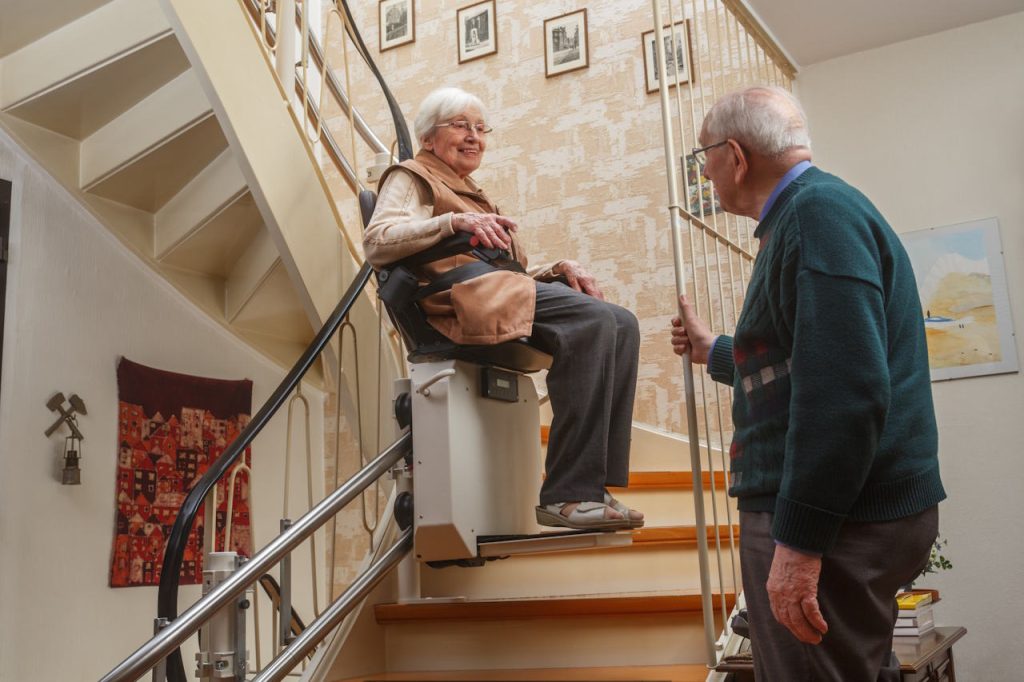
Stair lift safety features like seat belts, sensors, and battery backup help prevent accidents and keep users secure during daily use at home. These systems are built into the design to support safe, reliable movement on stairs without added stress or risk.
What Makes a Stair Lift Safe for Daily Use
A stair lift is more than a mobility device. It is something you rely on every day, often multiple times a day, so safety is built into every part of how it operates. From the way it starts and stops to how it responds to obstacles, each component is designed to reduce the chance of falls or injury.
Modern stair lifts use layered safety systems. That means no single feature is responsible for keeping you safe. Instead, multiple features work together to create a smooth, controlled, and predictable experience every time you use the lift.
Built-In Safety Features You’ll Find on Most Stair Lifts
Seat Belts for Stability
Even though stair lifts move at a slow speed, stability still matters. A seat belt helps keep you securely positioned in the chair, especially if you have limited balance or core strength.
It prevents shifting during movement and adds an extra level of confidence, particularly when traveling up or down longer staircases.
Obstruction Sensors
Obstruction sensors are one of the most important safety features. These sensors are located along the footrest and carriage of the lift.
If anything is detected on the stairs, such as an object, pet, or debris, the lift will automatically stop. This prevents collisions and helps avoid damage to the equipment or injury to others in the home.
Swivel Seats for Safe Entry and Exit
Getting on and off the stair lift is when many accidents can happen if the setup is not designed properly.
Swivel seats allow the chair to rotate at the top of the stairs, so you can safely exit onto the landing instead of stepping toward the staircase. Once in position, the seat locks securely in place before you stand up.
Footrest Safety Sensors
The footrest is another area where safety is critical. Built-in sensors detect objects in the path of the lift and stop movement before contact is made.
This is especially important in homes with pets or where items may occasionally be left on the stairs.
Smooth Start and Stop Technology
Older or lower-quality stair lifts can start and stop abruptly, which can feel unstable or uncomfortable.
Modern systems use controlled acceleration and deceleration to eliminate jerking movements. This helps maintain balance and reduces the risk of feeling unsteady while riding.
Backup and Emergency Safety Features
Battery Backup Systems
Power outages are unpredictable, but your mobility should not be.
Most stair lifts include a battery backup system that allows continued use even when the electricity is out. This ensures you can still safely move between levels of your home during an outage without being stranded.
Manual Controls and Call/Send Switches
Call and send controls let you move the stair lift without sitting on it. These are typically mounted at the top and bottom of the stairs.
This feature is useful for households with multiple users or caregivers who need to reposition the lift. It also reduces the need to climb stairs just to retrieve the chair.
Emergency Stop Functions
Stair lifts include easy-to-reach controls that allow you to stop the lift immediately if needed.
These controls are designed to be simple and responsive, giving users peace of mind in case something does not feel right during operation.
Safety Features That Depend on Proper Installation
Even the best safety features can only do their job if the stair lift is installed correctly.
Rail alignment, secure mounting, and proper spacing all play a role in how safely the lift operates. The lift also needs to match the user’s weight and mobility needs to function as intended.
We approach every installation with a focus on real-world use. That includes evaluating your staircase, your daily routine, and any potential obstacles that could affect safety over time.
Why Regular Maintenance Is Part of Stair Lift Safety
Safety is not just about how a stair lift is built. It is also about how well it is maintained.
Over time, components like batteries, sensors, and moving parts can wear down. If they are not checked regularly, performance can decline and safety features may not respond as expected.
Routine maintenance helps:
- Ensure sensors are working correctly
- Keep movement smooth and consistent
- Identify small issues before they become larger problems
We offer ongoing service and maintenance to make sure your equipment continues to operate safely long after installation.
Choosing the Right Stair Lift for Your Home in Arizona
Every home is different, and so is every staircase. Some homes have straight staircases, while others require curved systems with more customization.
Choosing the right stair lift means considering:
- Staircase layout
- User mobility needs
- Weight capacity
- Frequency of use
That is why we provide in-home assessments across the Chandler area and surrounding communities. This allows us to recommend a solution that fits both your space and your daily routine without compromising safety.
Schedule a Stair Lift Consultation in Chandler or Nearby Areas
If you are considering a stair lift, safety should be one of the first things you evaluate. The right system, installed correctly and maintained over time, can make your home significantly safer and easier to navigate.
We provide in-home stair lift consultations throughout Chandler and nearby areas, helping you choose the right solution based on your needs. Our team handles everything from recommendations to installation and ongoing support, so you can feel confident using your equipment every day.
Call us or schedule a consultation to get started.
