
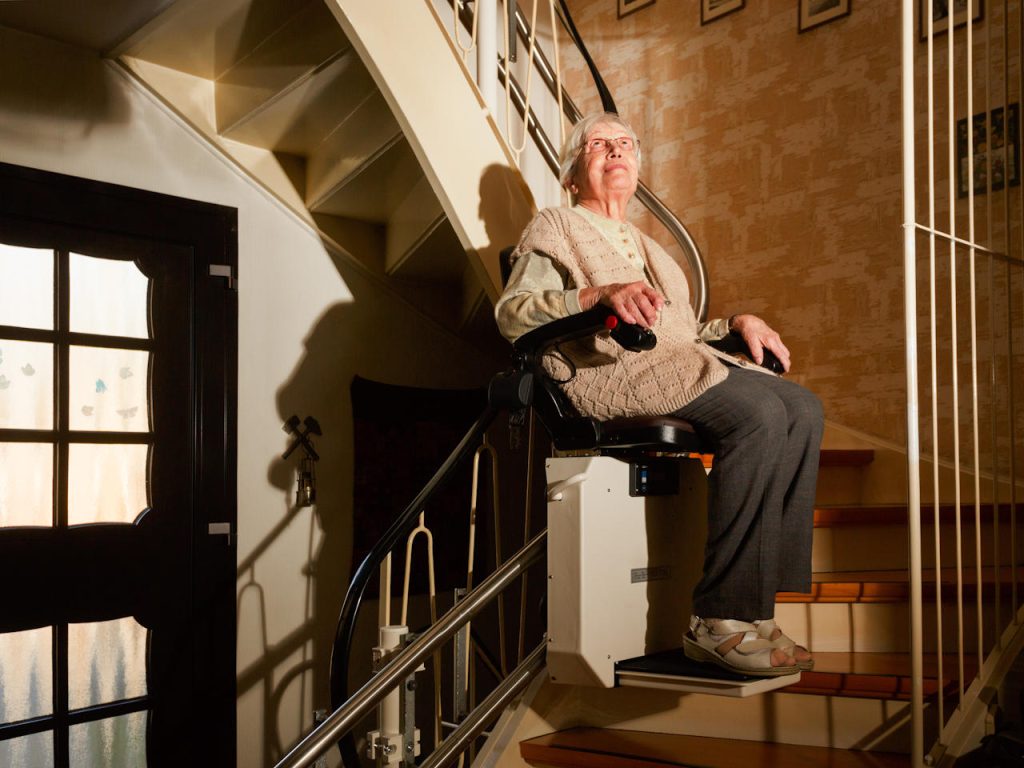
A stairlift can usually be removed, but moving it to another home depends on the rail type, staircase layout, equipment condition, and installation. In some cases, reusing the same lift is practical and cost-effective. In others, replacing part or all of the system may be the safer choice.
Whether you are moving, selling a home, recovering from surgery, or helping a family member transition to a new living arrangement, it is important to understand what can be reused and what must be assessed by a professional.
Why Someone May Need to Remove a Stairlift
Stairlifts are often installed to meet a specific mobility need, but those needs can change over time.
A homeowner may move to a one-story property, sell the home, or no longer need the lift after a temporary recovery period. In other situations, a family may need to remove a stairlift after a loved one moves into assisted living or passes away.
Some homeowners also want to take the equipment with them because it is still in good condition and may be useful in the next home. That can be possible, but relocation is not as simple as removing the lift and attaching it to a different staircase.
The rail, staircase dimensions, landing space, power supply, and condition of the equipment all matter.
Can a Stairlift Be Removed Without Damaging the Home?
Most stairlifts can be removed with minimal impact on the home when the work is handled properly.
A stairlift is generally attached to the stair treads rather than directly to the wall. Brackets secure the rail to several steps, which means removal may leave small screw holes or minor marks in the flooring or carpet.
These areas are often easy to repair. Carpet can usually be repositioned or patched, while holes in wooden stairs may be filled and finished. The amount of visible evidence left behind depends on the staircase material, how long the lift has been installed, and the original installation method.
Professional removal is recommended because the rail and chair can be heavy and awkward to handle. Improper disassembly may damage the equipment, the staircase, or nearby walls. It can also create a safety risk for anyone trying to move the system without the right tools or experience.
A trained technician can disconnect the power, remove the carriage and rail sections, and determine which components may still be suitable for reuse.
Can the Same Stairlift Be Installed in Another House?
Sometimes, but not every stairlift can be transferred to every staircase.
The new home must have a staircase that is compatible with the lift and its rail. Even when the chair itself is in good condition, the existing rail may be too long, too short, or configured for the wrong side of the stairs.
A technician will also need to check whether there is enough space at the top and bottom for safe entry, exit, and parking. Doorways, hallways, landings, handrails, and nearby walls can all affect whether the lift will fit properly.
The user’s current mobility needs should also be considered. A stairlift that worked well several years ago may no longer provide the right seat width, transfer position, weight capacity, or level of support.
Relocation should always begin with an assessment of both the equipment and the new staircase.
Straight Stairlifts Are Usually Easier to Move
Straight stairlifts are generally the easiest type to relocate because their rails follow a simple, uninterrupted staircase.
If the new staircase is also straight and has compatible dimensions, the rail may be reused or adjusted. In some cases, it can be shortened. Extending a rail may also be possible, depending on the model and whether compatible parts are available.
Even with a straight lift, there is no guarantee that every component will transfer successfully.
What Must Match at the New Staircase?
A technician will typically evaluate:
- The total stair length and angle
- The width of the staircase
- The space available at both landings
- The side of the stairs where the rail will be mounted
- The user’s size, transfer needs, and weight capacity requirements
The electrical setup also matters. Most modern stairlifts operate on rechargeable batteries, but the charging system still needs access to a suitable household outlet.
If the new staircase differs significantly from the original one, a new rail or different lift may be required.
Why Curved Stairlifts Are Harder to Relocate
Curved stairlifts are more difficult to move because the rail is custom-built for a specific staircase.
The rail may include bends, changes in angle, intermediate landings, or a custom overrun at the top or bottom. Those details are measured and manufactured to match the original home.
Even a staircase that looks similar may have different dimensions. A small change in the angle of a turn, the height of a landing, or the number of steps can prevent the rail from fitting safely.
In some cases, the chair and mechanical components may still be reusable with a newly manufactured rail. Whether that is practical depends on the brand, model, age, condition, and availability of compatible parts.
Because curved rails are highly customized, purchasing a new system may sometimes make more financial sense than trying to adapt an older one.
The Stairlift Should Be Inspected Before Reinstallation
A used stairlift should be fully inspected before it is installed in another home.
Age alone does not determine whether the equipment is safe, but older systems may have worn parts, weakened batteries, outdated controls, or limited parts availability. A lift that operated reliably in the previous home may still need maintenance before it can be used again.
A professional inspection may include checking the rail, carriage, seat, armrests, footrest, safety sensors, controls, charging system, and batteries. The technician may also test the emergency stop function, swivel mechanism, seat belt, and obstruction sensors.
Service history is helpful when available. Records can show whether the lift received routine maintenance and whether any major components were previously replaced.
Reinstallation should never be treated as a simple moving job. The lift must be fitted, secured, and tested as a safety device.
Is Moving a Stairlift Always Worth It?
Relocating a stairlift can save money, but only when the equipment is compatible with the new home and still has enough useful life remaining.
The total cost may include professional removal, transportation, inspection, new batteries, rail modifications, replacement brackets, labor, and reinstallation. If the lift needs several repairs or a completely new rail, the savings may be smaller than expected.
A newer straight stairlift in good condition is often the strongest candidate for relocation. An older lift with recurring issues or limited parts availability may be better replaced.
It is also important to consider whether the existing model still suits the user. Mobility can change, and the safest solution may involve a different seat design, greater weight capacity, powered swivel, folding rail, or other features.
A professional comparison can help you evaluate the cost of relocation against the cost and benefits of a new system.
What Can You Do With a Stairlift You No Longer Need?
If relocation is not practical, there are still several options.
Professional removal can prepare the staircase for sale, renovation, or regular household use. Depending on the age, model, and condition of the lift, the equipment may qualify for resale or a buy-back program.
Power Mobility & Lifts offers a buy-back option for certain stairlifts. Eligibility depends on the system and its condition, so the equipment must be reviewed before a value or removal plan can be confirmed.
Some components may also be recycled if the lift is too old or damaged to reuse. Batteries and electrical parts should be handled properly rather than placed with ordinary household waste.
If the user’s needs have changed, removal can also be an opportunity to consider another mobility solution. A different stairlift, wheelchair lift, ramp, or home access product may provide better support in the new setting.
Arrange Professional Stairlift Removal or Relocation
Removing a stairlift is usually possible, but successfully moving it to another home depends on the type of system, the new staircase, and the condition of the equipment. A professional assessment can clarify what can be reused and help prevent unsafe or unnecessary work.
Power Mobility & Lifts helps homeowners in Chandler and throughout the Phoenix area with stairlift removal, relocation guidance, inspections, repairs, and new installations. Contact our team to schedule an assessment and determine the most practical next step for your stairlift.
